 By smartcubs
 Ramen comes in many styles, and the broth is one of the biggest things that gives each bowl its character. Tonkotsu and shoyu ramen are two well-known choices, but they are very different in flavor, texture, and preparation.
Tonkotsu is known for its rich, creamy, pork-based broth, while shoyu ramen is usually lighter and more savory, with soy sauce playing an important role in its flavor.
Understanding the difference can help you choose the right ramen style or make a better bowl at home.
Tonkotsu vs Shoyu Ramen: Quick Comparison
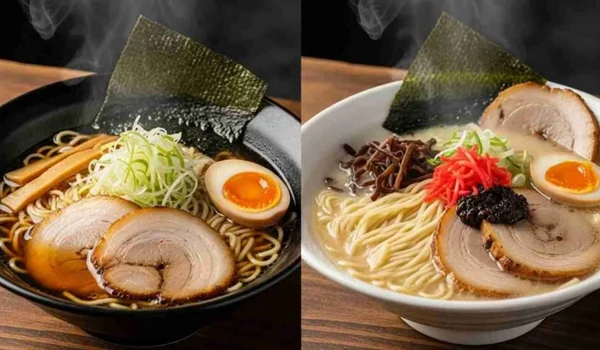
| Feature | Tonkotsu Ramen | Shoyu Ramen |
| Main flavor | Rich and porky | Savory and soy-forward |
| Broth base | Pork bones | Often chicken, pork, seafood, or vegetables |
| Color | White, cloudy, creamy | Usually brown and clear |
| Texture | Thick and rich | Lighter and cleaner |
| Soy sauce | Not usually the main seasoning | Key seasoning |
| Flavor intensity | Deep and heavy | Savory and balanced |
| Best For | Rich broth lovers | Those who prefer lighter ramen |
What Is Tonkotsu Ramen?
Tonkotsu ramen is famous for its pork bone broth. Pork bones are cooked for many hours, often at a strong simmer, to extract fat, collagen, and other components that give the broth its characteristic richness.
The result is usually a cloudy, pale broth with a creamy-looking appearance.
Despite its creamy texture, traditional tonkotsu broth does not necessarily contain dairy. Its rich appearance comes from the cooking process and the emulsification of fat and other components into the broth.
What Does Tonkotsu Taste Like?
Tonkotsu generally has a:
- Deep pork flavor
- Rich mouthfeel
- Savory taste
- Creamy texture
- Strong aroma
Because the broth is rich, it pairs well with simple toppings that provide contrast.
What Is Shoyu Ramen?
Shoyu means soy sauce in Japanese, and shoyu ramen gets much of its character from a soy-sauce-based seasoning.
The underlying broth can vary. Depending on the recipe and region, it may be made with chicken, pork, seafood, vegetables, or a combination of ingredients.
Unlike tonkotsu, shoyu ramen is commonly served with a broth that looks brown or amber and is relatively clear.
What Does Shoyu Taste Like?
Shoyu ramen generally has a:
- Salty and savory flavor
- Noticeable soy sauce character
- Aromatic broth
- Lighter mouthfeel
- Balanced umami taste
The flavor can range from delicate to quite intense depending on the amount and type of seasoning used.
The Biggest Difference: The Broth
The most noticeable difference is the type of broth and seasoning.
Tonkotsu focuses heavily on a long-cooked pork bone broth. Its richness comes from the pork bones and the cooking process.
Shoyu ramen focuses on a soy-based seasoning called tare. The broth underneath can be made from several ingredients.
This means that not every shoyu ramen broth is the same, while tonkotsu has a much more recognizable pork-based identity.
Which Broth Is Richer?
Tonkotsu is generally much richer.
Its thick mouthfeel and intense pork flavor make it feel heavier and more filling.
Shoyu ramen is usually lighter, although that does not mean it lacks flavor. A well-made shoyu broth can have plenty of umami while still feeling clean and easy to eat.
Which Is More Salty?
Shoyu ramen can taste noticeably salty because soy sauce is an important part of its seasoning.
However, the actual salt level depends on the recipe. Tonkotsu ramen can also contain plenty of salt because the pork broth itself is often combined with a seasoned tare.
So, you should not assume that one style is always lower in sodium than the other.
Tonkotsu Toppings
Tonkotsu ramen is commonly paired with toppings such as:
- Chashu pork
- Green onions
- Wood ear mushrooms
- Soft-boiled eggs
- Pickled ginger
- Sesame seeds
- Nori
These toppings add texture and freshness to the rich broth.
Shoyu Toppings
Shoyu ramen can also use many classic ramen toppings, including:
- Chashu pork
- Menma
- Green onions
- Nori
- Soft-boiled egg
- Spinach or other greens
- Fish cake
The toppings can vary significantly depending on the recipe and regional style.
What About The Noodles?
Noodle choice can also differ.
Tonkotsu ramen is often served with thin, straight noodles, which work well with the rich broth and allow the noodles to cook quickly.
Shoyu ramen can be served with a wider variety of noodle shapes and thicknesses.
However, there is no strict rule that says one noodle type must always be used with one broth.
Which One Should You Try?
Choose tonkotsu ramen if you:
- Love rich and creamy broths
- Enjoy strong pork flavors
- Prefer a heavier meal
- Like intense savory flavors
Choose shoyu ramen if you:
- Prefer a lighter broth
- Enjoy soy sauce flavor
- Like a clean but savory taste
- Want more variety in the underlying broth
Can You Make Both At Home?
Yes, but tonkotsu is generally more time-consuming.
Traditional tonkotsu requires long cooking of pork bones and careful preparation to achieve its characteristic richness.
Shoyu ramen can be more flexible for home cooking because you can prepare a flavorful stock and season it with a soy-based tare.
For a quicker homemade version, you can build a simple chicken or vegetable broth and add soy sauce, aromatics, and other seasonings.
Final Thoughts
The main difference between tonkotsu and shoyu ramen comes down to their flavor foundations. Tonkotsu is centered around a rich, long-cooked pork bone broth, while shoyu ramen gets much of its character from soy sauce seasoning and can use different types of stock.
If you want a creamy, deeply savory bowl, tonkotsu is a natural choice. If you prefer a lighter broth with a distinct soy flavor, shoyu ramen may be more suitable.
Both styles offer plenty of room for different noodles, toppings, and seasonings, making them very different but equally enjoyable ramen experiences.