 By smartcubs
 Making restaurant-style pizza at home can be difficult because a regular home oven usually does not reach the extremely high temperatures of a professional pizza oven. A pizza stone or pizza steel can help solve this problem by providing a hot surface that transfers heat directly into the pizza dough.
Both options can produce a crispier crust, but they work differently. A pizza stone is made from materials such as ceramic, cordierite, or stone, while a pizza steel is usually made from thick food-safe steel.
So, which one is better for home pizza baking? The answer depends on the type of crust you like, your oven, and how you plan to use it.
Pizza Stone vs Pizza Steel: Quick Comparison
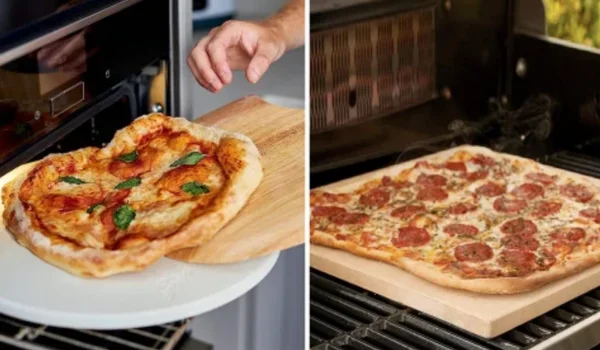
| Feature | Pizza Stone | Pizza Steel |
| Material | Stone, ceramic, or cordierite | Steel |
| Heat transfer | Moderate | Very fast |
| Bottom crust | Crisp and balanced | Very crisp and strongly browned |
| Preheating | Usually longer | Usually shorter |
| Durability | Can crack if mishandled | Generally very durable |
| Weight | Often lighter | Usually heavier |
| Cleaning | Simple but delicate | Relatively easy |
| Best For | Traditional-style pizza | Crispy, deeply browned crust |
How Does A Pizza Stone Work?
A pizza stone absorbs and stores heat from your oven. When the uncooked pizza is placed on it, the hot surface transfers heat into the dough.
This helps the bottom of the pizza cook quickly and develop a crisp texture.
Pizza stones are available in different materials and thicknesses. Thicker stones generally take longer to heat but can retain heat well.
A stone can be a good choice if you want a crust that is crisp on the outside while remaining softer toward the center.
How Does A Pizza Steel Work?
Pizza steel works on the same basic principle but transfers heat more aggressively.
Steel conducts heat much faster than stone, so when the dough hits the surface, the bottom can brown and crisp quickly.
This makes steel particularly useful if you enjoy a deeply browned and crunchy pizza base.
Which Produces A Crispier Crust?
If your main goal is maximum crispness and strong browning, pizza steel usually has the advantage.
Steel transfers heat quickly into the dough, which can produce a well-browned bottom in a relatively short baking time.
A pizza stone can still produce an excellent crust, especially when it is fully preheated and used with the right dough.
Which Is Better For Traditional Pizza?
A pizza stone can be a good option if you prefer a more traditional pizza-baking experience.
It provides strong bottom heat without transferring heat as aggressively as steel. This can help produce a crust with a crisp exterior and softer interior.
However, the final result also depends heavily on:
- Dough hydration
- Dough thickness
- Oven temperature
- Baking time
- Topping quantity
- Preheating time
The baking surface is only one part of the equation.
Which Heats Up Faster?
Pizza steel generally heats up faster and transfers heat more efficiently.
However, you should still preheat it thoroughly. Even if the steel becomes hot quickly, giving it enough time to reach a stable temperature helps ensure that the entire surface is ready when the pizza goes into the oven.
A pizza stone may require a longer preheating period because the material takes time to absorb and hold heat.
Which Is Easier To Maintain?
Pizza steel is generally more forgiving when it comes to durability. It is not likely to crack from normal handling in the same way some stones can.
A pizza stone should be handled carefully. Avoid exposing a very hot stone to cold water because sudden temperature changes can cause cracking.
Neither option usually needs soap after every use. Allow the surface to cool completely and remove baked-on food with a scraper or suitable brush according to the manufacturer’s instructions.
Can You Use Both?
Yes. Some home pizza makers use both a stone and steel for different baking situations.
You might prefer a stone for certain pizzas and steel when you want a particularly crisp bottom.
If you regularly make pizza at home, experimenting with both surfaces can help you understand which one works best with your oven and dough recipe.
Pizza Stone or Steel For Beginners?
For beginners, a pizza stone can be a straightforward introduction to baking homemade pizza.
It is widely available and can produce a noticeable improvement over a standard baking tray.
A steel may be better if your priority is fast heat transfer and a very crisp crust and you are comfortable handling a heavy, hot baking surface.
Common Mistakes To Avoid
Not Preheating Long Enough
Putting pizza on a cold or partially heated surface can result in a pale or soft bottom.
Adding Too Many Toppings
Heavy toppings add moisture and can prevent the crust from becoming crisp, regardless of whether you use stone or steel.
Using Too Much Flour
Excess flour underneath the pizza can burn on a very hot baking surface and create a bitter taste.
Making The Pizza Too Thick
If you want a crisp bottom, an extremely thick dough may take longer to cook through.
Moving The Hot Surface Carelessly
Both stones and steels become extremely hot. Use appropriate oven gloves and handle them carefully.
Pizza Stone vs Pizza Steel: Which Should You Buy?
Choose a pizza stone if you:
- Want a traditional-style crust
- Prefer a moderate level of crispness
- Want a versatile pizza-baking surface
- Are comfortable handling a more fragile surface
Choose a pizza steel if you:
- Want strong bottom browning
- Prefer a very crisp crust
- Want faster heat transfer
- Make pizza frequently
Final Thoughts
Both pizza stones and pizza steels can significantly improve homemade pizza. A pizza stone offers a more gentle and traditional heat transfer, while a pizza steel delivers stronger and faster heat to the bottom of the dough.
If you love a deeply browned, crunchy crust, steel may be the better choice. If you prefer a crisp but softer and more traditional crust, a stone can be an excellent option.
Most importantly, use plenty of preheating time, avoid overloading the pizza with wet toppings, and adjust your baking technique to suit your particular oven.